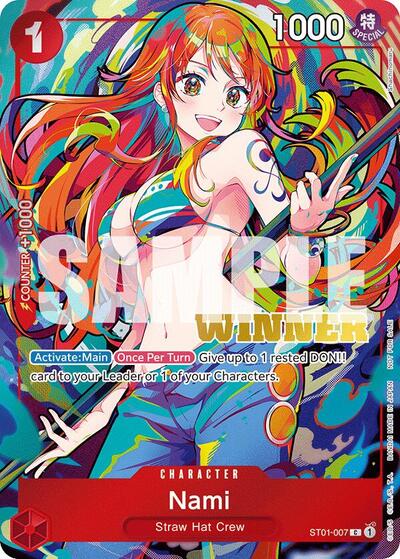
What the One Piece Card Game actually is
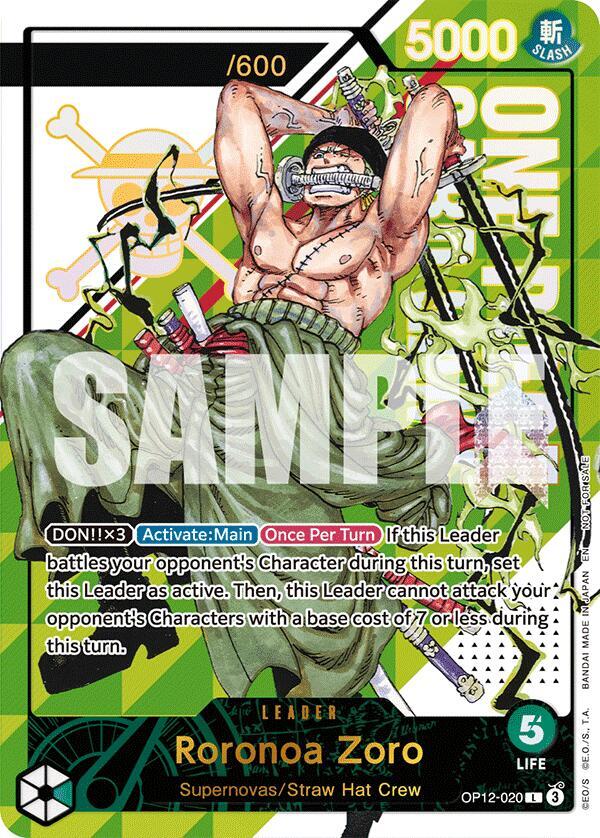
OPTCG is a 1v1 card game where you pick a Leader — a single character card that sits face-up in front of you the whole game — and build a 50-card deck around the color(s) on that Leader. Your Leader has life (usually 4 or 5), attack power, and a color identity. The game ends when your opponent's Leader takes one more damage than they have life cards left to soak.
Two things make OPTCG feel different from Magic or Pokémon. First, resources are not a card type — you have a fixed pile of 10 DON!! cards that "come in" one per turn on schedule, so you never miss a land drop. Second, damage taken by your Leader turns your top deck cards into face-down life cards that you can play from — losing life is a slow-motion resource swing, not just a countdown.
Leaders, colors, and deck building
Every OPTCG deck is:
- 1 Leader card (defines your colors)
- 50 Main deck cards (Characters, Events, Stages) — up to 4 of any card by name
- 10 DON!! cards (identical, provided in every starter and box)
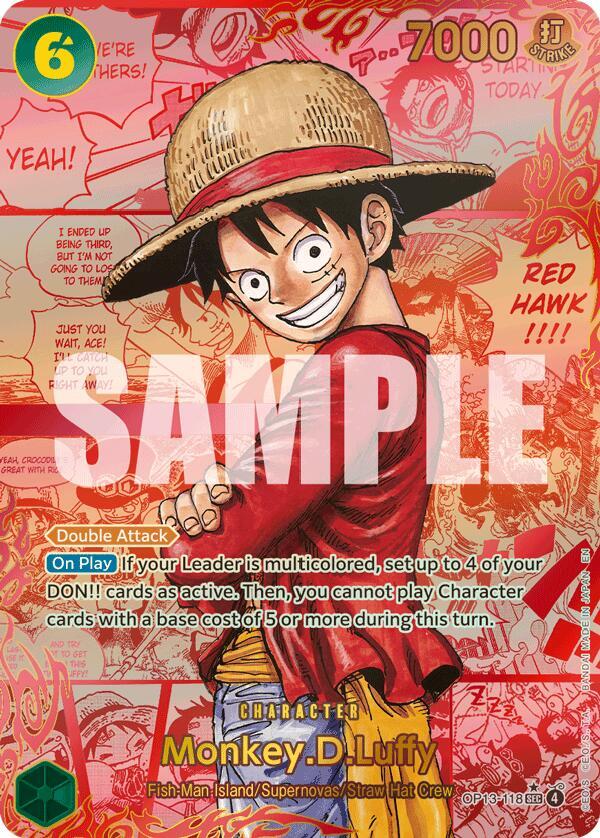
The Leader restricts your deck to its color(s). A mono-red Leader (like Monkey.D.Luffy from Romance Dawn) can only run red cards. A dual-color Leader (e.g. a Red/Green Zoro) opens both pools. There are six colors: Red (aggressive rush), Green (rest / tap effects), Blue (bounce and control), Purple (DON!! ramp), Black (cost reduction and removal), and Yellow (life manipulation).
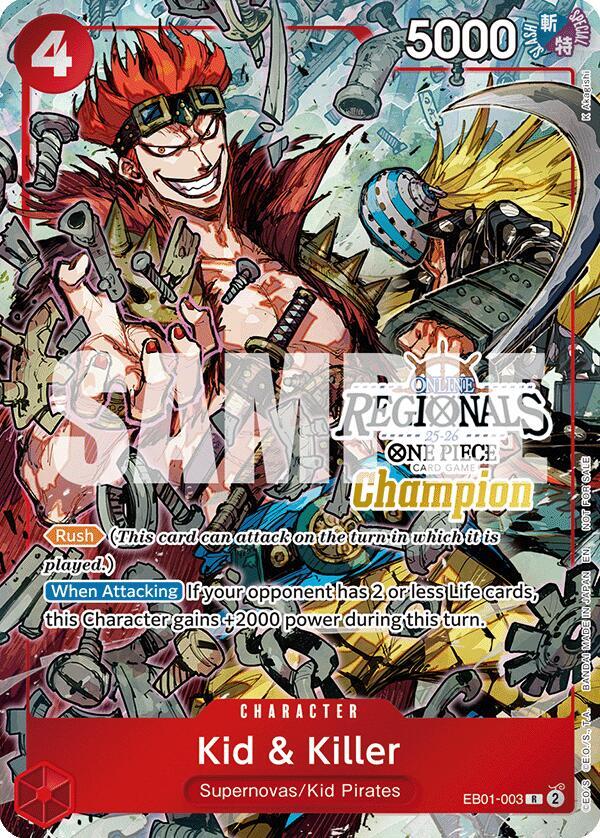
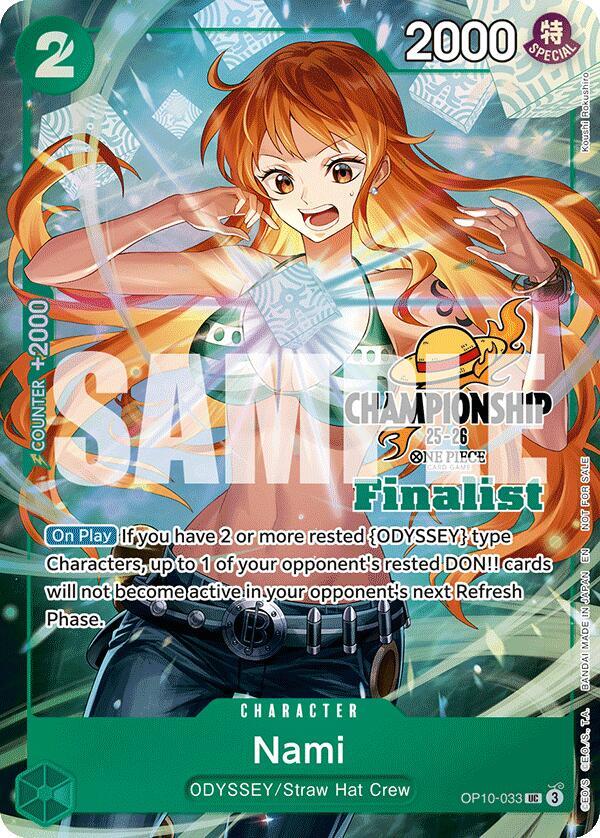
How a turn works, briefly
- Refresh — un-rest all your cards and DON!!
- Draw one card (skip on turn 1 for the player going first)
- DON!! phase — add 1 DON!! from your DON!! deck to your active pool (2 on turn 1)
- Main phase — spend DON!! to play Characters, cast Events, attach DON!! to boost attacks, or attack with your Leader / rested Characters
- End
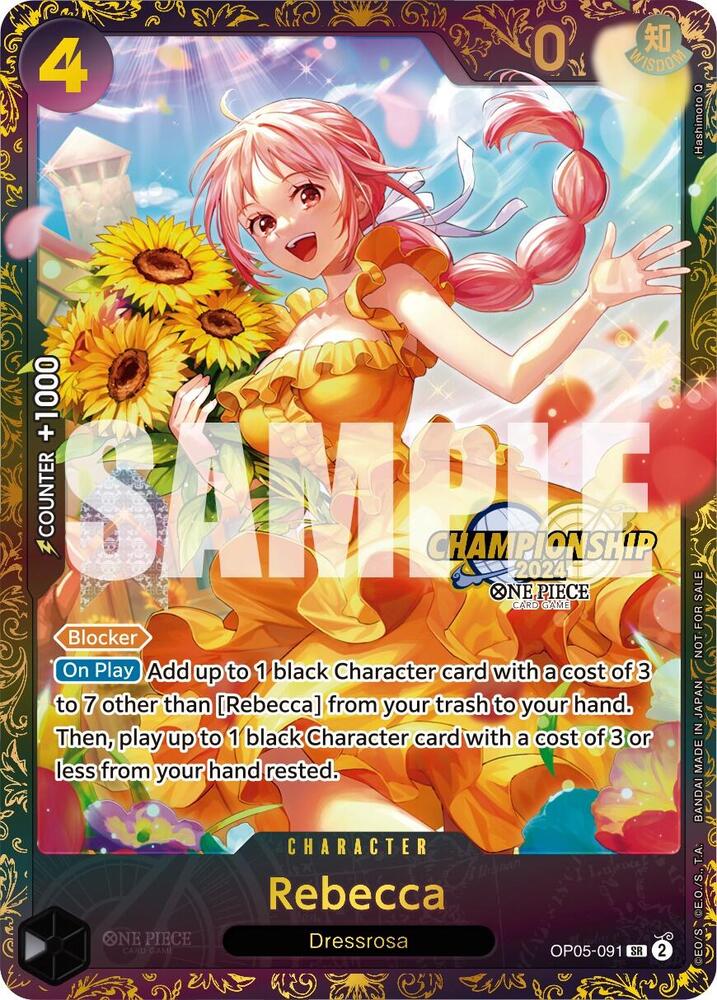
Combat is the neat bit: when you attack, your opponent can play a Counter card from hand to add power to their defender. Nearly every card has a Counter value printed in the corner — so every card in your deck is a potential blocker, and holding cards to block is a real choice.
What to buy first (with real prices, July 2026)
You do not need to buy a booster box to play. In fact, the cheapest way in is almost always a starter deck.
1. A starter deck (~$10–$15)
Every starter deck is a complete, legal, tournament-ready deck. As of July 2026 there are 24+ starter decks in English — pick a Leader whose character or vibe you like. The Uta ST11 and Purple Kaido ST04 decks are perennially strong new-player picks. Grab two if you have a friend to play with.
2. Sleeves + a deck box (~$8–$15)
OPTCG cards are the same size as Magic sleeves. Any standard-sized sleeve works; Dragon Shield Matte and Ultra Pro Eclipse are the two most common at locals.
3. Boosters or a booster box (optional, $80–$120 sealed)
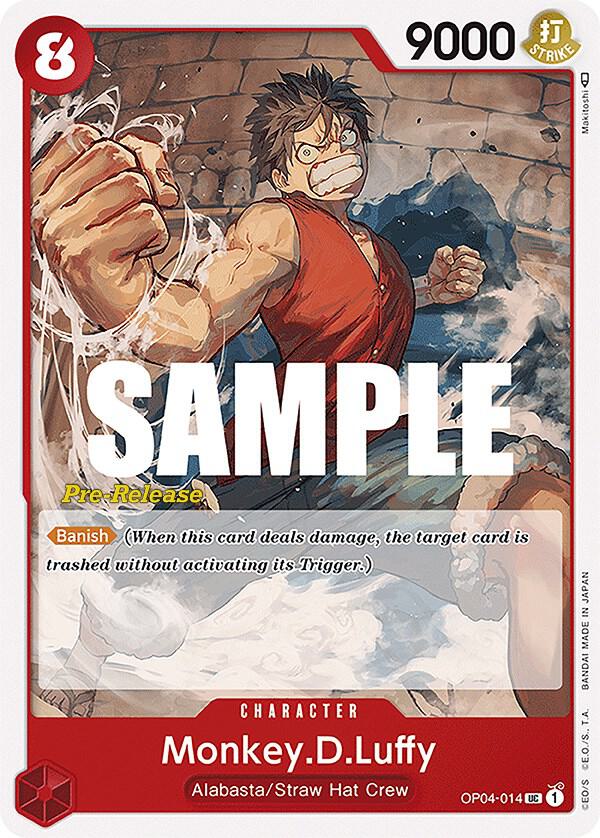
Opening cards is fun, but a random box will not build you a good deck on its own — most of the value in OPTCG concentrates in a small number of Super Rares and Leaders per set. Buy singles for the deck you actually want to play; buy a box only if you enjoy the ripping experience. Check current sealed prices on our One Piece market or the individual set guides before you commit.
Budget guidance
- ~$15: one starter deck. Legal at your local's casual night.
- ~$50: two starters (a deck for you and a friend) + sleeves + a deckbox.
- ~$100: one starter as a base, then $70–$80 of singles to bring it toward a competitive list. This is the sweet spot for most new players.
- $300+: a full tier-1 competitive deck. Most of the cost is 4-of Super Rares and the Leader; the commons and uncommons are pocket change.
Where to play
Most game stores that carry Magic or Pokémon now stock OPTCG. Bandai runs a formal organized-play program (Store Championships → Regionals → Nationals → Worlds), but weekly locals are casual and beginner-friendly — bring a starter deck, lose a few games, ask questions. Online play through the Bandai TCG+ app and the community-run Optcgsim are both free.
Next steps
Once you have a Leader and a deck:
- Read our rarities guide so you know what to keep vs trade from packs you open.
- Track prices on the One Piece market and use the Value Screener to spot singles trading below their market average.
- Try the Deck Lab to prototype a legal 50-card list before you spend money on singles.
- Simulate pack openings for any set with the Pack Lab — honest EV, not marketing math.
Common questions
Is the One Piece Card Game beginner friendly?
Yes. The rules fit on a single page and starter decks are pre-built and legal out of the box. The DON!! resource system removes the mana-flood problem most TCGs have — you always get exactly one DON!! per turn.
What should I buy first for the One Piece TCG?
Start with a starter deck ($10–$15 at MSRP) so you have a legal, playable deck the same day. Add a booster pack or two of a current set to try opening. Only buy a booster box once you know which Leader you enjoy.
How many cards are in a One Piece deck?
50 cards plus 1 Leader plus 10 DON!! cards. You can run up to 4 copies of any card by name (except the Leader, which is a single card).
Does the One Piece TCG rotate?
There is no forced rotation as of July 2026 — every legally printed set is tournament legal. Bandai occasionally bans or restricts individual cards, but the pool grows rather than cycles.
Do I need to buy singles to be competitive?
Eventually, yes. Competitive lists usually run specific Super Rares and Leaders that a starter deck won't include. A tuned starter plus $30–$60 of targeted singles gets most players to their first locals win.