![Shanks (Championship 2023) [Serial Number] — One Piece Promotion Cards](https://tcgplayer-cdn.tcgplayer.com/product/514047_400w.jpg)
The eight primary rarities
Every OPTCG card has a rarity letter printed under the artwork. Ordered from most-to-least common in a booster:
| Symbol | Name | Roughly per box | Notes |
|---|---|---|---|
| C | Common | ~8 per pack | Fills your deck. Most Cs are worth cents. |
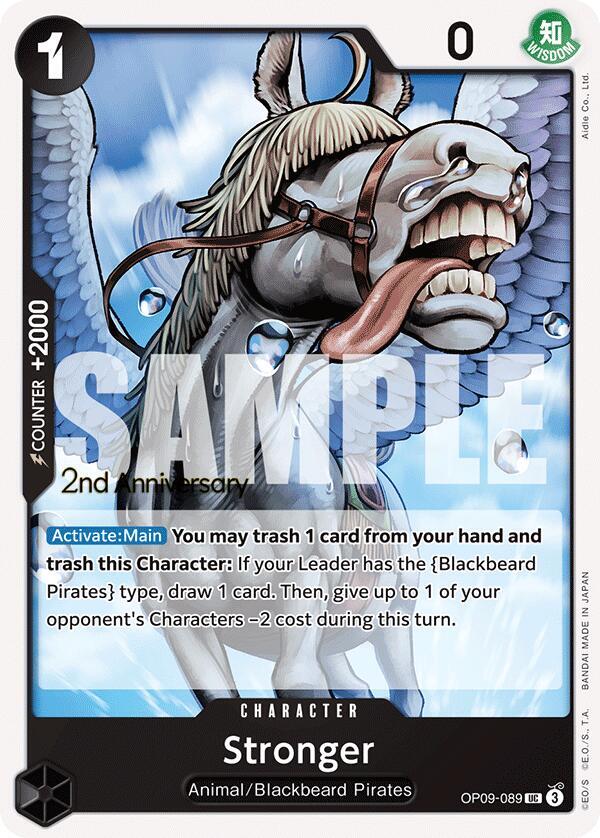
| UC | Uncommon | ~2 per pack | Occasional playables. Championship-promo UCs can spike (see the current $600 Stronger CS 25-26 Finalist). |
| R | Rare | ~1 per pack | Where deck staples live. Most sit under $5; competitive Rs run $5–$30. |
| SR | Super Rare | ~1 per 6 packs | The main chase slot. Set-defining Characters and Leaders. |
| SEC | Secret Rare | ~1 per 6 boxes | Full-art chase card. Usually a Leader or hero character. |
| L | Leader | 1 per starter, plus alt-arts in boosters | Sits face-up all game. SP and Manga Leader alts are the real money. |
| SP | Special | Premium Booster / anniversary product | Alt-art Leaders and Characters. SP Leaders are top-tier value. |
| PR | Promo | Event / championship / product bonuses | Ranges from cheap store promos to five-figure Finalist cards. |
Alt-art treatments (across rarities)
Rarity tells you how often a card prints. Treatment tells you how it looks. The same card can exist at three or four price points depending on treatment:
Parallel (alt art)
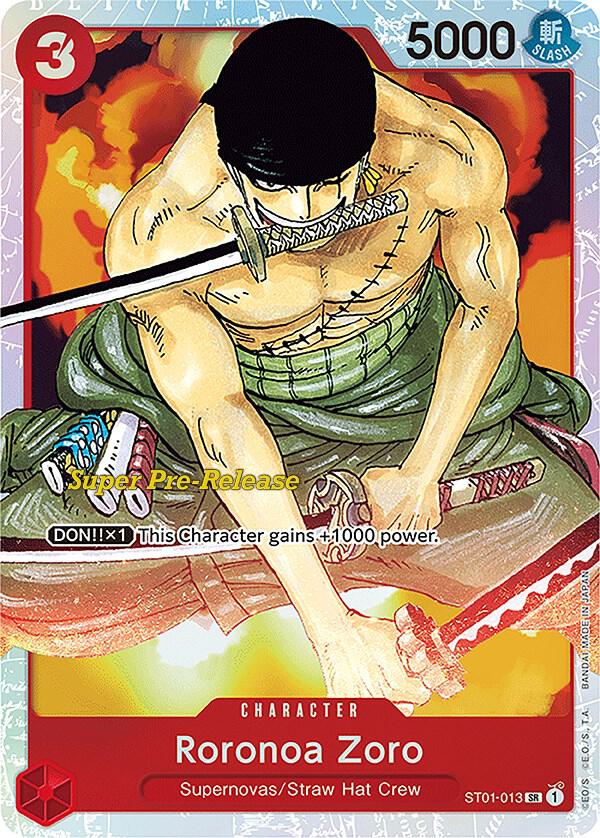
A different illustration or full-art crop of a standard R or SR. Printed at roughly half the pull rate of the base version. Examples in our current snapshot: Roronoa Zoro (001) Parallel is trading near $590 versus low-single-digits for the base L printing.
Manga Rare
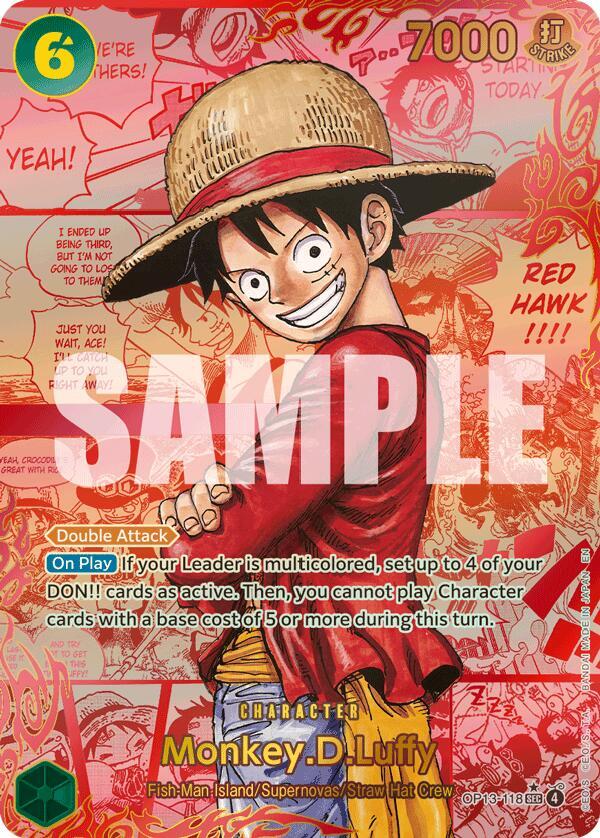
Black-and-white line art styled after the original manga panels — introduced in the OP07 era and now appearing in most main sets. Manga treatments run 5–20x the standard version. The Monkey.D.Luffy (119) Alternate Art (Manga) currently indexes near $30,000 on our snapshot.
SP (Special) foil
Full-art with a heavy silver or gold foil treatment, usually a Leader. Pulled from Premium Booster or given out at Anniversary events. Monkey.D.Luffy (119) SP (Gold) is around $50,000 in our data.

Championship Finalist / Winner promos
Bandai prints special cards for tournament finalists. These are the highest-print-quality cards in the game and command steep premiums even in NM raw condition — the Yamato (Championship 2024 Finals 2nd Place) SR trades near $100,000; the finalist Luffy 001 Online Regional 2024 Vol.2 PR is around $600.
Serial-numbered grails
Bandai occasionally prints 1-of-1 or /50 serial-numbered cards for championship events. We flag these with a grail marker across the site — they trade in a completely different market from open-print rarities and their prices are barely comparable. Recent grails on our snapshot:
- Monkey.D.Luffy — ST01-001 [Serial Number] — ~$200,000
- Shanks (Championship 2023) [Serial Number] — ~$100,000
- Roronoa Zoro (Serial Numbered) — ~$50,000
- Portgas.D.Ace (Serial Numbered) — ~$9,950
- Yamato (Serial Numbered) — ~$4,250
These are collectibles first and cards second. When we filter analytics or Deals pages, grails are excluded by default because a single sale can distort a set's average price 10x.
Pull rates and expected box value
Bandai does not publish official pull rates, but community aggregate data from thousands of box openings gives a stable estimate for main sets: roughly 1 SR per 3 packs, 1 SEC per 5–6 boxes, 1 Manga Rare per 2–3 boxes. Alt-art (Parallel) SRs land at roughly the same rate as base SRs.
Because most of a set's total value concentrates in 10–20 cards, the average box underperforms its MSRP in expected value once you subtract shipping and singles-market friction. The Pack Lab simulates this honestly — no marketing math.
What to keep vs sell from packs you open
- Keep: every SR, SEC, SP, and Manga Rare — even the ones you don't play. Prices drift up in the year after a set releases; sleeve them until you actually need cash or trade fodder.
- Sleeve immediately: anything above ~$30, in a penny sleeve then a top loader. Fingerprints on a $500 SP kill 20–30% of resale value.
- Trade / sell: extra Rs and UCs of cards you don't play. Locals are the highest-margin sales channel.
- Grade: only cards well above the ~$25 grading fee, ideally $150+ raw, and only if the surface looks NM out of the pack. Championship PRs and SP Leaders are the usual candidates.

Common questions
What is the rarest One Piece Card Game rarity?
Serial-numbered grails (usually 1-of-1 or /50 championship prizes) are the rarest. Below those, Secret Rare (SEC) and Special (SP) Leader alt-arts are the top public-print tier. A pull rate around 1 SEC per 6 booster boxes is typical for main sets.
Are Manga Rares real rarities or just alt art?
Manga Rares are a distinct print treatment: black-and-white line art styled after the manga panels. They exist across multiple rarity tiers (usually R or SR) and command a large premium over the base version — often 5–20x the standard printing.
What is an SP card in the One Piece TCG?
SP (Special) cards are chase alt-art Leaders and Characters, usually pulled from Premium Booster products or reprinted in Anniversary and Championship sets. SP Leaders are among the most valuable non-serial cards in the game.
What drives value in the One Piece TCG?
Three things: rarity tier, alt-art treatment (SP, Manga, Parallel, Championship promo), and competitive playability. A tournament-staple SR in a current Leader's colors will hold value longer than a pretty-but-unplayed SEC.
Should I grade my One Piece cards?
Only grade cards worth well over the grading fee ($20–30 per card, months of turnaround). Championship promos, SP Leaders, and Manga Rares are the usual candidates. A common R in a $12 booster is not worth grading.