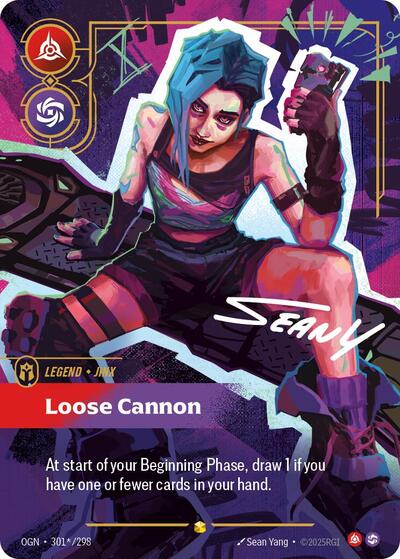
What Riftbound actually is
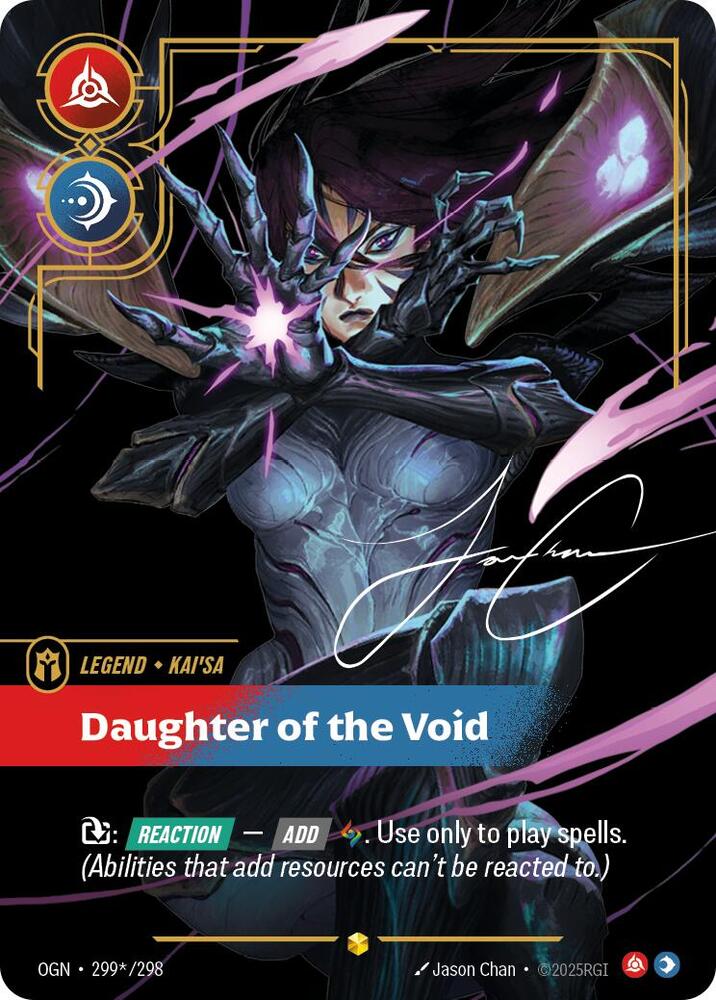
Riftbound is a 1v1 (with multiplayer variants) trading card game where you pick a Legend — a League of Legends champion who sits face-up in your command zone — and build a deck around their Domains (color identities like Fury, Mind, Body, Chaos, Order, and Calm). You and your opponent fight over a shared row of battlefields; capturing enough of them wins the game.
The design DNA is deliberately different from Magic: instead of "reduce opponent to 0 life," Riftbound is a zone-control game. You are always fighting somewhere on a map, and the map is the objective.
Legends, Domains, and colors
Every Riftbound deck is anchored to one Legend. A Lux deck plays Order and Mind cards; a Darius deck plays Fury and Body. Some Legends are multi-domain (marked like "Fury;Mind") and let you mix colors more freely, but at the cost of tighter deck slots.
The six Domains, at a glance:
- Fury — aggression, direct damage, big Units.
- Mind — draw, tempo, control effects.
- Body — combat tricks, big defensive plays, resilience.
- Chaos — randomness, disruption, tempo swings.
- Order — structure, buffs, protection.
- Calm — utility, healing, recursion.
Pick a champion whose kit you already know from League — the Riftbound card usually mirrors the vibe. Lux protects and buffs; Darius punishes; Ahri baits and repositions.
How a turn works, briefly
- Ready your rested cards and generate one Rune (Riftbound's resource) automatically.
- Draw a card.
- Main phase — spend Runes to deploy Units to battlefields, cast Spells, and move Units between battlefields.
- Combat — Units fight at whichever battlefield they occupy; the side with the higher total power at that battlefield captures it.
- End — score any captured battlefields.
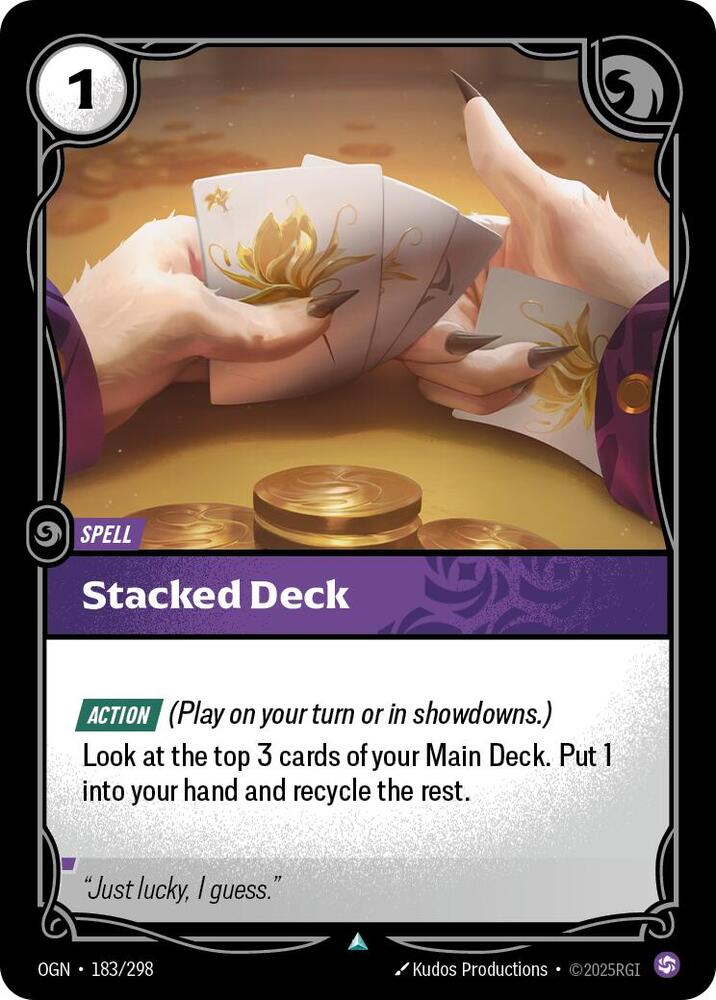
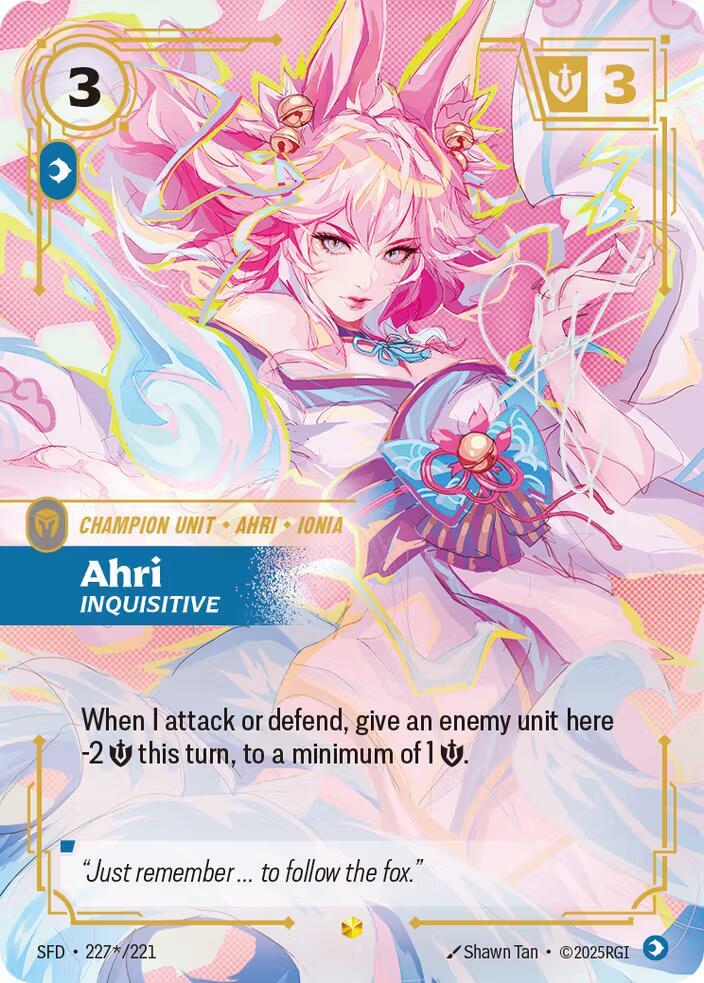
The clever bit is that combat happens per-battlefield, not "board vs board." You can win one fight by overwhelming a corner and lose another because you spread thin — positioning matters as much as raw card power.
Released sets and the Vendetta launch
Three sets are legal and freely available as of July 2026:
- Origins — the foundation set. The default starting point; cheapest and most reprinted.
- Spiritforged — expansion #1, adds Spirit Bond mechanics and new Legends including Lee Sin (whose Centered Rare is one of the most valuable non-metal cards in the game — currently around $110 on our snapshot).
- Unleashed — expansion #2, adds the Kai'Sa / Rek'Sai Void arc and a wider Chaos pool.
- Vendetta — released July 31, 2026. Presale flagging is derived from each set's release date, so Vendetta moved into normal set averages and Deals rankings automatically at street date. Cards with too little price history are still held out of those rankings until they clear our minimum-evidence gate.
Launch-week guidance: Vendetta booster boxes have been widely listed around $110–$120 MSRP. Across earlier Riftbound and Lorcana sets, launch prices on chase singles have typically softened over the weeks after release as supply lands — we are not putting a figure on Vendetta's own move, because it has only just released and one day of history is not a trend. Unless you need a card for a launch tournament, buy from settled prices on our Riftbound market.
What to buy first (with current prices)

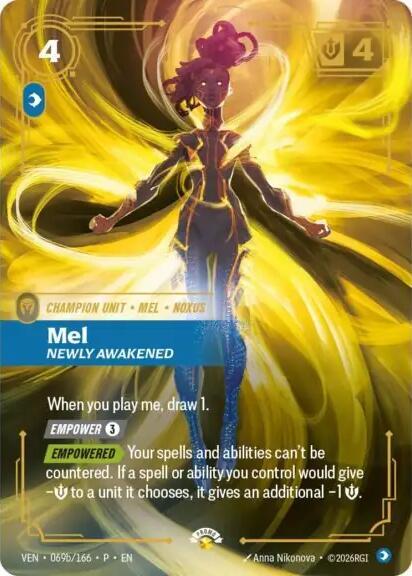
1. A Legend starter deck (~$15–$25)
Every starter is a legal, playable deck built around one Legend. As of July 2026 there are eight starters covering Lux, Darius, Ahri, Lee Sin, Kai'Sa, Yasuo, Jinx, and Volibear. Pick the champion whose League playstyle you already understand.
2. Sleeves + a deckbox (~$10)
Standard 66×91mm sleeves fit Riftbound cards. Nothing special needed.
3. One or two boosters, not a box (yet)
The Riftbound rarity spread is heavy on Commons and Uncommons; a random box will not build you a competitive deck on its own. Buy singles for the deck you actually want to play — a full-featured Lux deck runs around $80 in singles as of July 2026, and the Deals screener will surface cards trading below their market average that week.
Budget guidance
- ~$20: one starter. Legal at any casual night.
- ~$60: two starters + sleeves + a Vendetta booster to try opening on release.
- ~$120: a starter as a base and $80 of singles toward a tournament-tuned Legend build.
- $250+: multiple Legend decks or a full playset of a top competitive list.
Where to play
Riftbound is stocked at most game stores that carry Magic or Pokémon. Riot runs an organized-play program with Store Championships and Regional events (details on the official Riftbound site). Community play is very active on Discord and there is a fan-run simulator for testing decks online — the Deck Lab is coming next; for now the Pack Lab simulates set openings.
Next steps
- Read our rarities guide so you know what to keep vs trade.
- Track prices on the Riftbound market.
- Spot bargains on the Value Screener.
Common questions
Is Riftbound the League of Legends card game?
Yes. Riftbound is Riot's physical TCG built around League of Legends champions and Runeterra lore. It is distinct from Legends of Runeterra (the digital-only card game Riot published from 2020).
When did Riftbound Vendetta release?
Vendetta is Riftbound's fourth main set and it released on July 31, 2026. It is now in the normal released-set pricing path on InkSight: every Vendetta card has a daily-snapshot price page. Cards stay out of market averages only until they clear our minimum-evidence gate for price history.
How do you win a game of Riftbound?
You capture battlefields. Each game has a shared row of battlefield objectives; you deploy Units and Signature Spells to fight for them, and the first player to score enough battlefield points wins.
What should I buy first for Riftbound?
A starter deck. Every starter is a complete legal deck built around a single Legend. Add a booster or two to try opening. A booster box is only worth it once you know which Legend you enjoy piloting.
Does Riftbound rotate?
No rotation as of July 2026 — all three released sets (Origins, Spiritforged, Unleashed) plus the upcoming Vendetta are legal. Riot has communicated a growing, non-rotating card pool for the foreseeable future.